
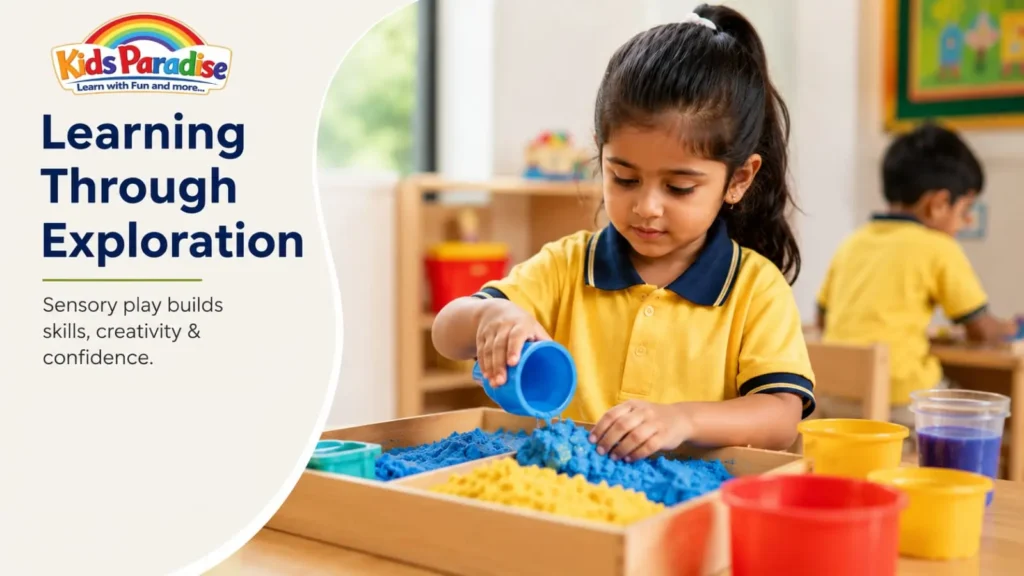
Children learn about the world through touch, sound, movement, sight, and exploration. During the early years, every new texture, color, sound, and activity helps shape a child’s understanding, creativity, and confidence. One of the most effective ways to support this natural learning process is through sensory play.
Sensory play includes activities that stimulate a child’s senses and encourage hands-on exploration. These experiences help children develop important skills while making learning fun, engaging, and meaningful.
At SSDIASS Pre Play Kids Paradise, we believe children learn best when they are encouraged to explore, discover, and interact with their surroundings through joyful activities and creative experiences.
In this blog, we explore why sensory play is important for early childhood development and how it supports overall growth during the most important learning years.
What Is Sensory Play?
Sensory play refers to activities that engage a child’s senses, including:
- Touch
- Sight
- Hearing
- Smell
- Movement
These activities may involve:
- Sand play
- Water activities
- Clay modeling
- Finger painting
- Music and sound games
- Texture exploration
Sensory experiences help children understand the world around them in an interactive way.
- Improves Brain Development
Sensory play helps strengthen connections in a child’s growing brain.
Through exploration and interaction, children improve:
- Memory skills
- Observation abilities
- Attention span
- Understanding of cause and effect
These experiences support overall cognitive development.
- Encourages Curiosity and Exploration
Children are naturally curious learners.
Sensory activities encourage them to:
- Explore independently
- Ask questions
- Discover new experiences
- Build confidence while learning
This helps create excitement around education and discovery.
- Supports Fine Motor Skill Development
Activities like painting, clay play, and picking up objects help strengthen small hand muscles and coordination.
These skills are important for:
- Writing preparation
- Holding objects properly
- Everyday tasks
- Hand-eye coordination
- Helps Build Communication Skills
Sensory play encourages children to describe textures, colors, sounds, and experiences.
This improves:
- Vocabulary development
- Speaking confidence
- Listening skills
- Social interaction
Children learn to communicate ideas more clearly through shared activities.
- Encourages Creativity and Imagination
Sensory activities allow children to use imagination freely.
Creative exploration through colors, shapes, music, and textures helps children:
- Express emotions
- Develop creativity
- Build independent thinking
- Explore new ideas confidently
- Creates a Fun Learning Environment
Children learn more effectively when they enjoy the process.
Sensory play turns learning into:
- Interactive experiences
- Hands-on discovery
- Enjoyable classroom activities
- Positive learning moments
- This keeps children actively engaged.
- Supports Emotional Development
Sensory activities can help children feel calm, relaxed, and emotionally comfortable.
They also support:
- Emotional expression
- Confidence building
- Patience and focus
- Positive classroom behavior
A nurturing environment helps children feel secure while learning.
- Encourages Social Interaction
Group sensory activities teach children how to:
- Share materials
- Work together
- Communicate with friends
- Participate in teamwork
These experiences help improve social confidence and cooperation.
- Helps Children Learn Through Real Experiences
Young children understand concepts better through direct interaction and hands-on activities rather than only listening or observing.
Sensory learning makes education more practical and meaningful.
- Builds Confidence Through Independent Learning
When children explore and complete activities on their own, they develop a sense of achievement and confidence.
This encourages:
- Independent thinking
- Problem-solving
- Positive self-esteem
- Enthusiasm for learning
Why Choose SSDIASS Pre Play Kids Paradise?
At SSDIASS Pre Play Kids Paradise, we focus on creating engaging and activity-based learning experiences that support overall child development.
Our Focus Areas:
- Sensory and creative learning activities
- Child-friendly classrooms
- Confidence-building experiences
- Interactive early education
- Emotional and social development
- Joyful and safe learning environment
We believe every child learns best through exploration, creativity, and happiness.
Final Thoughts
Sensory play is an important part of early childhood education because it supports creativity, confidence, communication, and overall development through hands-on learning experiences.
By encouraging children to explore textures, sounds, colors, and activities, sensory learning helps build strong foundations for future growth and education.
At SSDIASS Pre Play Kids Paradise, we are dedicated to creating meaningful learning experiences that inspire curiosity, creativity, and joyful childhood development every day.